
Description
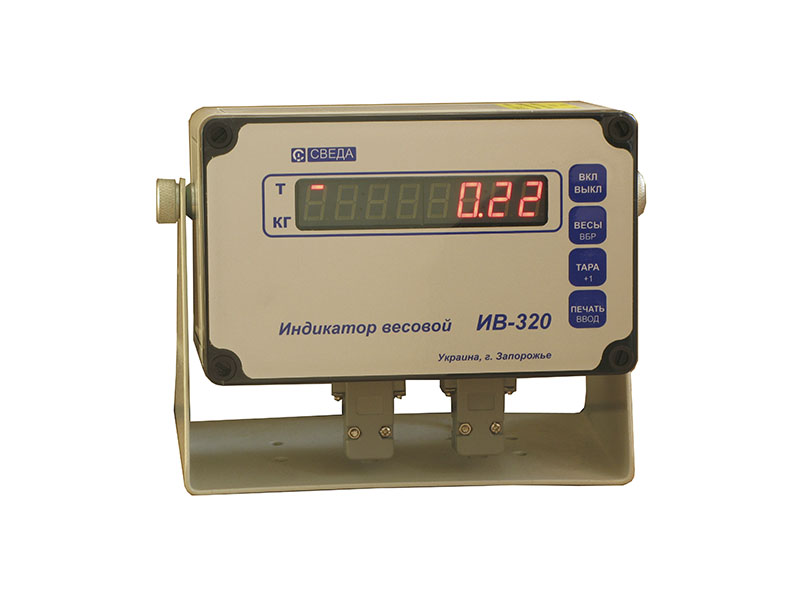
Weight indicator IW-320 intended for converting input analog signals from load cells and indicating a results of weighing as part of weighing devices and control systems.
The indicator has three main modes of operation: “Calibration”, “Setting” and “Weight”.
In the mode “calibration”, the indicator measurement limits are set for subsequent work in the weighing mode.
The mode “Settings” allows you to set a number of parameters and operating modes of the indicator.
In mode “Weight”, the indicator constantly measures the signal of the load cells and calculates the weight of the load.
In this mode, the indicator allows:
– to make a sample of the tare weight;
– set the indication to zero automatically (if it was specified during setup) and manually;
– print out the weighing results by pressing the “Print” button or permanently, if it was specified during setup.
FEATURES:
– two measuring channels of weight with the possibility of parallel operation;
– display of weight from two channels separately and (or) in total;
– simple calibration both with reference weights and using the mV/V values of the load cells;
– six- or four-wire connection of load cells;
– selectable range of input signals;
– user-configurable filtering modes in the weight measurement channel;
– indication of instability of weight responses;
– indication of overload of scales;
– data transmission to external devices on a serial interface using the ModBus protocol or the “Sweda” protocol;
– two-standard (RS-485 or RS-232), user-selectable, galvanically isolated serial interface;
– use of wireless data transmission using an external modem;
– connection of a remote duplicating display for indication of weighing results;
– adjastable indicator brightness;
– the ability to operate from an autonomous power source (battery) with the ability to recharge the battery when operating from a utility power source;
– configurable automatic shutdown of the device by time;
– bracket for fixing the device.