
Description
PURPOSE:
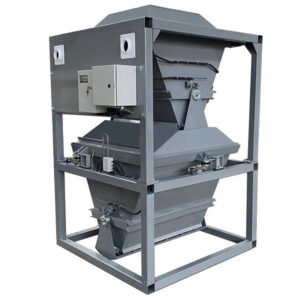
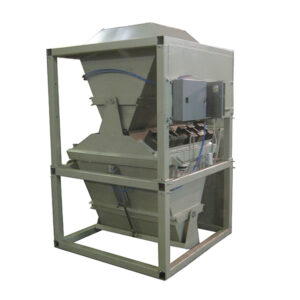
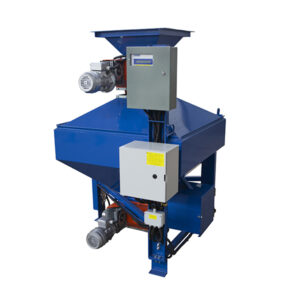
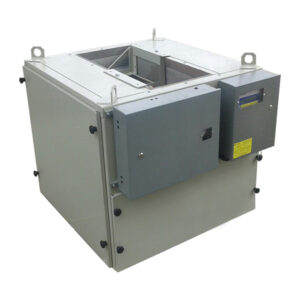
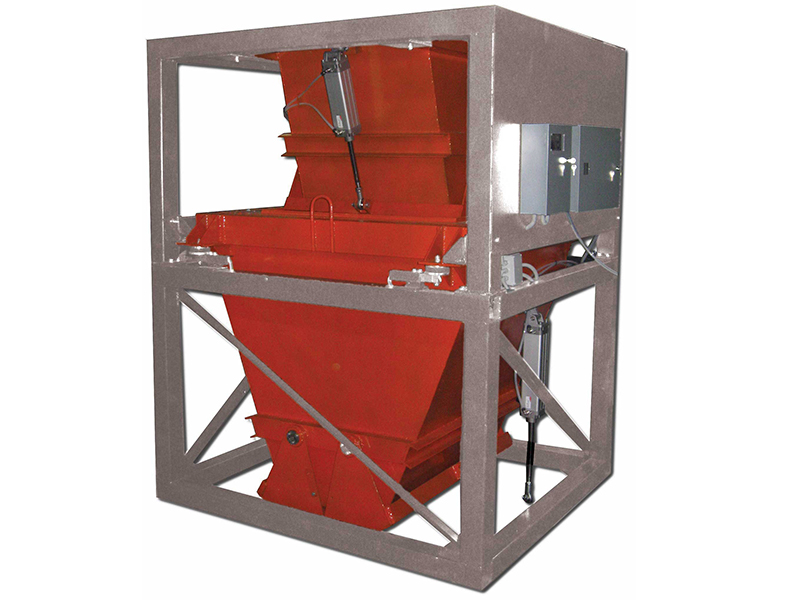
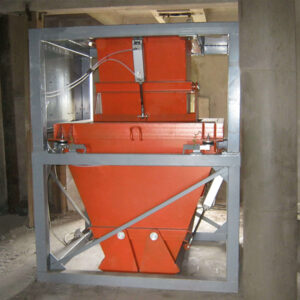
Automatic hopper scales SWEDA WBA-1500-P-280 are intended for accounting of bulk materials, in particular, grain in a stream.
Hopper scales are intended for weighing bulk materials and products by dividing them into separate discrete loads (portions), sequentially determining the mass of each discrete load, and summing up the weighing results. Each of the discrete loads (portions) then enters the total mass.
Find out more about the equipment – subscribe to our ТikTok 
CONSTRUCTION AND PRINCIPLE OF OPERATION:
Hopper scales include the following components:
- a material feed, consisting of a receiving hopper with a sector gate, which provides material loading into the weighing hopper, and is driven by a pneumatic cylinder rod;
- a weight hopper with a set of load cells and a sector gate that provides material unloading and is driven by a pneumatic cylinder rod;
- weight processor PW-310 or weight processor PW-310i and junction box;
- pneumatic drive cabinet;
- frame with covers (optional).
The work of the hopper scales consists in performing the following cycles:
- Material flow into the weighing hopper due to opening and closing of the loading gates;
- Measuring the mass of the weighing hopper;
- Unloading material by opening and closing the unloading gate;
- Calculation of the mass of a portion of the material that has passed through the scales;
- Accumulation of the portion value in the weight processor.
The frequency of operation of the gates and the repetition period of the cycles of a given production supply of material.
The execution of the algorithm and control of all actuators of the hopper scales are provided by the weight processor PW-310 or weight processor PW-310i. The processor also monitors the state of all units of the scales, displays the results of their work, communicates with the upper-level of the control system of technological process and the automated controlling system.
Our specialists will provide supervision of installation, adjustment, commissioning, warranty and subsequent maintenance of hopper scales.